Working With My Sisters
How we make two family businesses work.

We are a business family. And my sisters and I are involved in two family businesses.
My father was the first in his family to go to college. Then the first to go to medical school. Then the first to build a dermatological practice that evolved in to three medical spas under the Forever Institut umbrella. He did this all with the idea that this business would be a family business – not just “his” business. My sister Rachel is CEO of Forever Institut, my sister Cyrille runs one of the locations, and my sister Roxane, an MD herself, is considering joining the business. While I am not involved in the day-to-day of Forever Institut, I am a shareholder and Forever Institut is a key account for Alchimie Forever.
My father also founded Alchimie Forever, our skin care brand, our second family-owned business. While my sisters are not involved in the day-to-day, they are shareholders. Rachel is on the board of directors, and as mentioned above Forever Institut is a key client. And while my father does not run operations, he leads product development, is involved in high-level strategy, and is also on the board.
My life is all about family business. And not just my life - family businesses are everywhere, making up ~90% of US businesses and over half of GDP (more statistics on family businesses below for the curious among you).
Being part of two family businesses is a privilege. One of the things I love the most about it is how I get to know my father and my sisters as business people, in addition to knowing them as humans, as family. Our relationships are richer because we get to work together.
I work with both my father, and my sisters. And while family is family, there is a clear distinction here. Working with my father is predicated on a vertical relationship. We are from two separate generations. He is the elder, the wiser. There is history of authority, there is an undeniable experience gap.
In contrast, working with my sisters is predicated on a horizontal relationship (even if I am the oldest sister!). We are peers by default. We share the same origin story. While I am more likely to say exactly what I think to my sisters than to my father, there are blurred boundaries between us, and sometimes we step on each other’s toes.
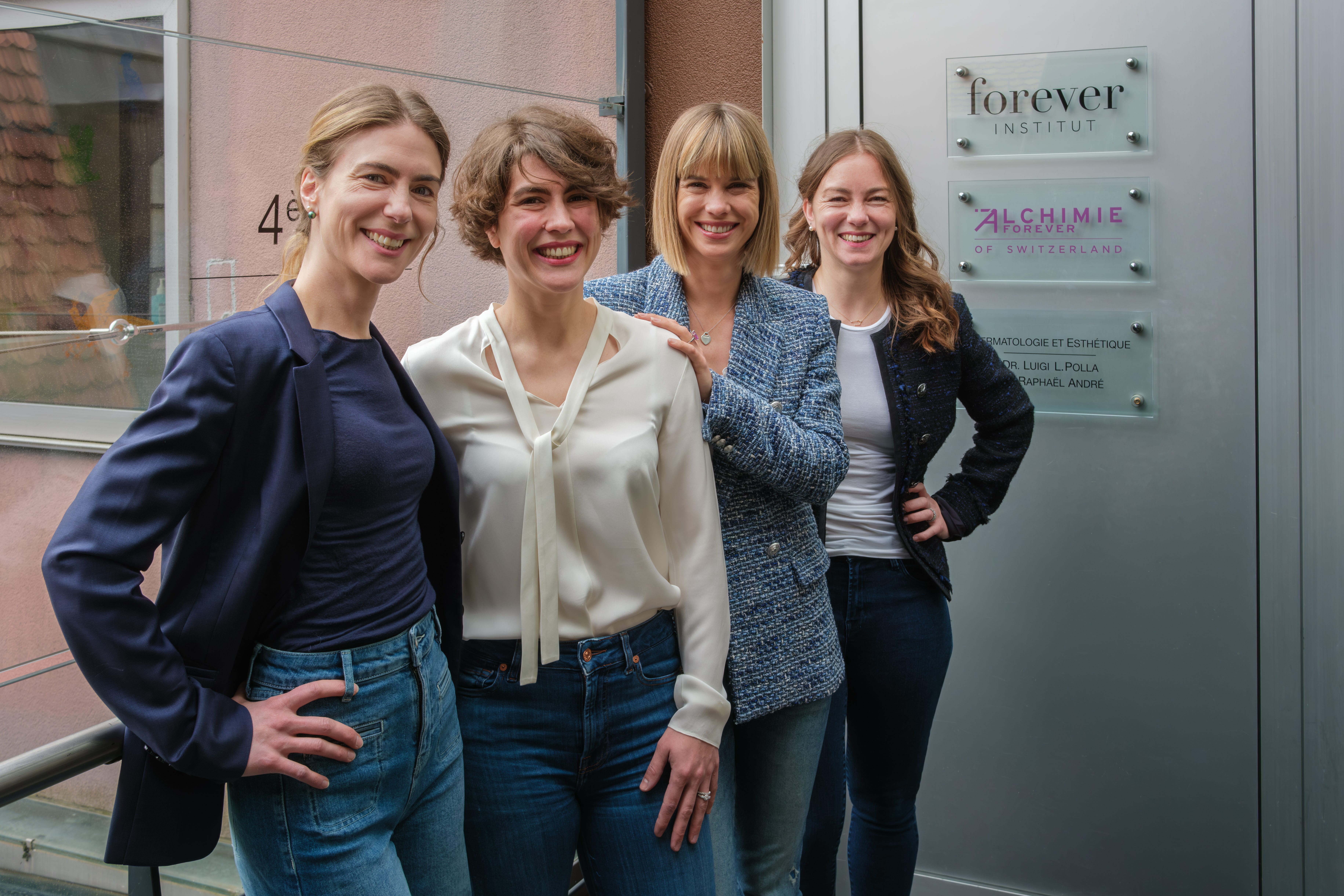
As such, we have had to work hard at being good at working together as sisters. Because being part of two family businesses is also a responsibility. Here are some of the systems we have put in place to be productive, grow the family businesses, and maintain our family relationships.
1. We took a class.
About ten years ago, my father, myself and two of my sisters, and the husband of my sister who couldn’t attend, spent a week at INSEAD in Fontainebleau, France for their family business program. The intense seminar, attended by a dozen families, focused on case studies and frameworks to teach us about governance, strategy, succession planning, and more. The learnings were invaluable and continue to guide our family business interactions today.
2. We are clear on our shared values.
Part of the work we did at INSEAD was to define our family business values. More than a decade later, they continue to guide us, we go back to them when we disagree, when we feel unsure about a decision to make. Our values as we defined them in 2014: We act out of
Love and passion for what we do
Loyalty
Accountability
Audacity
The desire to make a difference
3. We stay in our lanes.
Early on, after stepping on each others’ toes a few times, we made sure to be crystal clear about roles, job descriptions, and ownership of decisions. This helps us avoid confusion and overlap. While we all give each other advice about life and work (what is more sisterly than that?!), we also know when to stop, and when to let each other make the final decision.
4. We (try to) separate “family time” from “business time.”
Every Sunday, I call my family. The unspoken rule is that unless there is an urgent business matter or I have given a sister a heads up the previous day, these calls are “social calls.” We chat about life, family, my niece and nephew, Dad’s golf game, and try to stay away from talking work.
5. We know it’s ok to agree to disagree.
As a family, we are consensus-seekers and conflict-avoiders, so this does not come naturally to us. Perhaps because of this, we have worked hard to normalize disagreement, and to make sure it doesn’t feel (too) personal. We also, however, strive to disagree “in private,” while always showing a united front “in public.”
6. We have bi-annual Family Business Meetings.
This is another practice that came out of our INSEAD week. Every other year, we convene the family for a weekend of business updates and bonding activities. This event includes family members not working in the businesses, spouses, and children of any age. The goal is to ensure the whole family has a big picture of where the businesses are, and continues to align on our shared our family business values.
7. We protect our relationships above all.
It’s easy to say this when things are going well, yet it matters most when they’re not. Especially when we disagree, we remember that the businesses matter, but the relationships matter more. We remember that we can always build another business, but we can never build another family.
Statistics on Family Businesses in the US
If you want more context as to the importance of family businesses in the US, here are some statistics. (Various sources, including Cornell SC Johnson College of Business and Conway Center for Family Business.)
Family businesses are not just small/local—they span from indie brands like ours to giants like Walmart (considered the world’s largest family business).
~87–90% of U.S. businesses are family-owned or controlled.
Roughly 30+ million family businesses operate in the US.
About 35% of Fortune 500 companies are family-controlled.
Family businesses are the backbone of the US economy, as they contribute approximately 54-57% of US GDP. Indeed, most American jobs are tied directly or indirectly to family businesses, which employ almost 60% of the U.S. workforce and are responsible for 75–78% of new job creation.
Family businesses also are a training ground for entrepreneurship:
77% of new ventures start with family involvement.
Nearly half of entrepreneurs grew up in a family business.
Finally, family businesses are resilient, even if succession is a core concern:
The average lifespan of a family business is approximately 24 years.
Survival rates:
40% make it to 2nd generation
12% to 3rd
3% to 4th+
Wow, that’s really interesting. As an only child I always thought that having a family business would be so beautiful - and it looks like it is!